
What Is a Sound Reinforcement System?
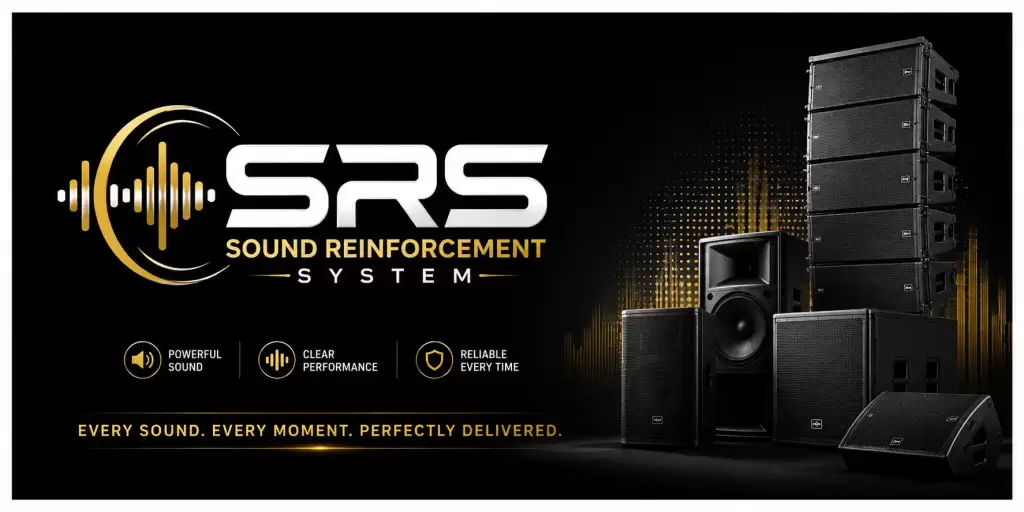
From live concerts to corporate seminars, educational events to worship services, consistent and clear sound is a must. A sound reinforcement system can be a big help here. When the professional audio system is properly designed, all words, notes, and announcements are delivered clearly to the audience.
In either a small meeting room or a large auditorium, state-of-the-art audio systems can provide more effective sound distribution and less feedback and distortion. Understanding the basic elements of an effective sound reinforcement system will make it easier to make appropriate decisions when planning an audio installation or event setup.
What Is a Sound Reinforcement System?
A sound reinforcement system is a set of audio equipment used to amplify and broadcast a sound to a public audience. A professional audio system is designed to deliver uniform audio over a larger area and to serve a larger number of listeners than a home audio system.
An audio reinforcement system is a standard audio system that will pick up sounds from a microphone or instrument, process the sound, and send it to a speaker at an appropriate volume.
The function of a sound reinforcement system is to make sound louder, but more importantly, clearer, balanced, and intelligible throughout the venue.
Why Is Sound Reinforcement Important?
Without a well-designed professional sound system, there will be difficulty in clearly hearing speech, music, or announcements.
Benefits include :
– Improved speech intelligibility
– Consistent sound coverage
– Better audience experience
– Reduced audio distortion
– Effective communication during events
– Enhanced performance quality
Whether for making announcements from a public address system or as a complete event sound system for concerts, sound reinforcement systems ensure that the message is transmitted to everyone clearly.
How Does a Sound Reinforcement System Work?
The fundamental audio path of a sound reinforcement system consists of:
1. Sound is captured through microphones or instruments.
2. Signals travel through an audio equipment setup.
3. The audio is processed and mixed.
4. Signals are amplified before being played on speakers.
5. The audience hears clear and balanced sound.
Understanding audio signal flow is one of the most important sound engineering basics because every component in the system affects the final sound quality.
Main Components of a Professional Audio System
All professional audio systems have several key components that function together to capture, manipulate, amplify, and distribute sound. Knowledge of these components is essential in making a reliable and efficient sound reinforcement system in any venue or event.
Audio Input Sources
Every professional audio system begins with input devices.
Common input sources include:
– Wireless Microphones
– Condenser Microphones
– Dynamic Microphones
– Musical instruments
– Playback devices
– Laptops and media players
HawkPro offers a range of dynamic and condenser microphones designed for professional applications and live performances.
Audio Mixing Console
The mixing console is the control center of a live sound system.
Its functions include:
– Volume control
– Equalization
– Audio routing
– Effects processing
– Channel management
A mixer helps engineers create a balanced live audio setup for audiences and performers.
Signal Processing Equipment
Signal processors enhance audio quality in the signal prior to its delivery to speakers.
Examples include:
– Equalizers
– Compressors
– Feedback suppressors
– Digital signal processors
Proper signal processing is essential for maintaining a reliable audio reinforcement system.
Loudspeaker System
The loudspeaker system is needed to provide sound to listeners.
Key components include:
– Speakers
– Subwoofers
– Line arrays
– Stage monitors
– Studio Monitors
HawkPro offers powered loudspeakers designed for professional event and venue applications, including active speaker solutions with XLR connectivity and DSP processing.
Types of Sound Reinforcement Systems
Not every sound reinforcement system is made in the same fashion. The optimal arrangement can vary based on the size of the venue, audience size, and application. Whether it’s in a small meeting room or a large stadium, there are varying audio needs that are met by different systems.
Small Venue Systems
Ideal for:
– Classrooms
– Meeting rooms
– Small houses of worship
– Community halls
It usually comes with a small public address system, microphones, and powered speakers.
Medium Venue Systems
Suitable for:
– Conference halls
– Educational institutions
– Corporate events
– Medium-sized auditoriums
For a medium-sized pro-audio system, a number of zones of speakers, mixers, and monitoring solutions are required.
Large Venue Systems
Used in:
– Stadiums
– Concert venues
– Large auditoriums
– Public gatherings
These sophisticated sound reinforcement systems are complex to plan, tune professionally, and scalable in infrastructure.
Common Applications of Sound Reinforcement Systems
Clear and consistent sound is the key to several industries and environments, so sound reinforcement systems are used. They are employed for dependable sound coverage in different events and facilities, to boost the experience of the audience, and to facilitate communication.
Educational Institutions
Provide effective classroom instruction, seminars, and announcements on campus, all of that kind of thing.
Corporate Events
A reliable professional sound system is crucial for presenting, conferencing, and hybrid meetings.
Houses of Worship
Uniform sound for church services, music, and meetings.
Live Music Venues
A comprehensive live sound system will allow for the best audio for the performers and the audience.
Government Events
Public ceremonies and official communications require dependable sound distribution.
Public Gatherings
For large events, a powerful Public Address system and Event Sound system are often used.
Key Factors to Consider Before Choosing a Professional Audio System
The best professional audio system depends on careful planning. Other considerations like system size, future needs, acoustics, and venue expansion can be important to the value and performance of a system.
Venue Size
The bigger the venue is, the more power you’ll usually want from the speaker, and the larger the sound coverage zone has to be.
Audience Capacity
The number of people present will directly impact system design and speaker positioning.
Indoor vs Outdoor Use
Outdoor environments require higher output and weather-resistant equipment.
Acoustic Environment
Questions of room acoustics can affect the way the sounds reflect, clarity, and intelligibility.
Future Expansion
Select an audio solution that can be expanded to suit your needs.
Budget Planning
The selection of an audio reinforcement system is a balance between performance, reliability, and cost.
Common Challenges in Sound Reinforcement
Despite its well-designed nature, a system may still experience problems like:
– Audio feedback
– Uneven sound coverage
– Poor acoustics
– Equipment compatibility issues
– Signal interference
– Incorrect gain staging
Understanding sound system components and audio flow can resolve these issues.
Modern Trends in Professional Audio Systems
The world of professional audio system technologies is ever-changing.
Popular trends include:
– Digital mixing consoles
– Networked audio systems
– Wireless control platforms
– Smart DSP processing
– Integrated monitoring solutions
– Remote system management
Modern live sound systems provide greater flexibility and efficiency than ever before.
Why Professional System Design Matters
The purchase of equipment is not the only aspect of a successful sound reinforcement system.
With professional system design, you can guarantee:
– Proper speaker placement
– Accurate coverage calculations
– Balanced signal flow
– Reduced feedback issues
– Better long-term reliability
Basic knowledge of sound engineering and choosing appropriate sound system components is essential to get professional results.
How HawkPro Supports Professional Audio Installations
HawkPro is a dependable supplier of audio products and accessories, providing solutions to match a variety of audio applications. They have a wide range of products, such as microphones, active speakers, snake cables, stage boxes, and various other accessories for audio installations and events.
Typical products used in commercial applications are:
– Wireless Microphones
– Condenser Microphones
– Dynamic Microphones
– Speakers
– Audio Cables
– XLR Connectors
– Stage Boxes
– Snake Cables
– DI Boxes
– Headphone Amplifiers
– Studio Monitors
So, when you mix quality equipment with good enough system design, organizations can end up with a dependable pro audio setup that actually works the same way across a bunch of different uses.
Frequently Asked Questions
How is a PA rig different from a sound reinforcement system?
A public announcement system is used to amplify speech and delivery of announcements, while a sound reinforcement system offers a total surround sound solution for speech, music, and live sound.
What is needed for a professional Audio system?
The common items of equipment used are microphones, mixers, processors, amplifiers, speakers, audio cables, stage boxes, DI boxes, and monitoring systems.
What are there for sound reinforcement systems to work with?
In general, they capture the sound with input devices, then process the signal, amplify it, and finally spread it through speakers so people in the audience can clearly hear.
What is the mixer’s role in sound reinforcement?
Basically, a mixer helps manage, level, and redirect the audio signals across the whole chain while also keeping overall sound quality in check.
How do I pick the right sound system for my venue?
Just look at the venue size , how many people you expect, the room’s acoustic behavior, what the system is for, and also how much room you need for scaling later.
Why is audio signal flow important?
When the audio signal flow is correct, each component functions properly, minimizing noise, distortion, and performance problems, and increasing system reliability.
Add Comment