
Digital Audio vs Analog Audio, Which Is Better for Sound Quality
When selecting any audio gear, one of the fundamental choices is whether to use analog systems or digital. Both technologies can be very effective but treat sounds differently. Knowing this will allow you to decide which gear to use in a studio, home system, or professional sound system. Now we will know about Digital Audio vs Analog Audio System and which is better.
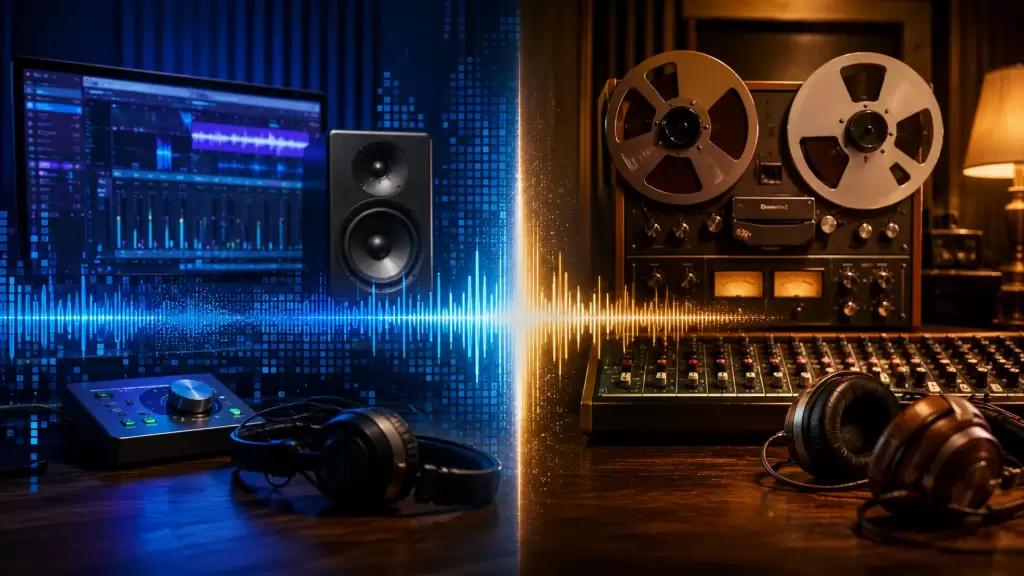
Digital Audio vs Analog Audio : What’s the Difference?
The significant difference between these is the representation of the sound signal.
Analog audio is an analog signal that is continuously connected to the original sound wave. For instance, these can be vinyl records, cassette tapes, or even a standard analog mixer.
Digital audio converts sound into numerical data through sampling. This information can be stored, edited, copied, and processed by computers and other devices.
This difference is central to modern audio technology. Analog systems operate on continuous signals; digital systems operate on sound as data.
How the Two Systems Handle Sound
Noise or distortion can enter into analog signals as they traverse physical components. Digital systems convert sound to data, which is easier to store and process in a consistent manner.
Yet, none of these are necessarily superior as a format. The quality of the equipment, recording technique, signal conversion, and playback device are all factors that influence the final product.
How Does Audio Technology Affect Sound Quality?
When it comes to analog audio and digital audio, the question is which is better. In fact, many factors will impact the outcome.
What Affects Sound Quality?
There is a need for a sound quality comparison of microphones, speakers, room acoustics, amplifiers, cables, and signal processing.
Analog sound quality delivers listeners the warmth and natural sounding audio qualities that they love. In today’s digital sound quality, however, excellent clarity, low noise, and accurate reproduction can be achieved.
The quality of the complete system often matters more than simply choosing analog or digital.
Pros and Cons of Analog Audio
| Advantages | Disadvantages |
| Warm, natural character | Can introduce noise |
| Hands-on workflow | Physical media can degrade |
| Popular with musicians | Less convenient to edit |
| Simple signal path in some setups | May require more maintenance |
Some people also prefer analog audio for its distinctive sound and customization options, making it appealing to musicians and audio purists alike.
Advantages and Disadvantages of Digital Audio
| Advantages | Disadvantages |
| Easy to store and edit | Requires digital conversion |
| Consistent reproduction | Quality depends on equipment |
| Low noise in good systems | Some prefer analog character |
| Convenient for modern workflows | Can involve complex setups |
However, with proper sample rates and bit depths, modern digital audio can produce excellent results. It is also simple to edit, archive, and distribute.
Which Audio Format Delivers Better Sound Quality?
When it comes to sound quality comparison of the analog/digital debate can have no single winner.
Digital audio is the obvious way to go for many professional uses for its flexibility, ease of storage, and editing capabilities. It is also suitable for current audio signal processing.
Meanwhile, analog audio continues to be favored by musicians, producers, and fans for its audio quality and distinctive sound.
Most of the pro-studios use both technologies, mixing in the analog tone and digital recording/editing.
Common Myths About Digital and Analog Audio
One common myth is that analog always sounds better. While some listeners prefer its character, a high-quality digital system can deliver extremely accurate reproduction.
Another misconception is that digital audio is automatically cold or artificial. In reality, good recording techniques and equipment can produce natural-sounding digital recordings.
The truth is that audio technology is only one part of the equation. The entire signal chain affects what you hear.
How to Choose the Right Audio Technology
Your application should guide your decision.
For Recording and Production
Digital systems are convenient for recording, editing, and storing audio. An audio interface can connect microphones and instruments to a computer for digital recording.
For Live Events
A reliable live sound system needs equipment that is dependable and easy to operate. Many professional setups combine analog inputs with Digital Audio Systems for flexible and efficient sound processing.
For Professional Applications
When investing in professional audio equipment, consider the complete system. Your microphones, mixer, amplifier, speakers, and processing equipment should all work together.
Mistakes to Avoid When Choosing Audio Equipment
Do not purchase equipment on the basis of price or brand. It is not sufficient to simply have expensive equipment to have good sound because the rest of the setup may not be compatible.
Before purchasing, always check compatibility, connections, and signal levels.
It is also important to know how your equipment is connected. An Audio Signal Flow Diagram can be used to show how a signal travels from its source to its final destination.
Tips to Get the Best Audio Quality
Use a quality sound source. The quality and placement of the microphone can be very important.
Ensure equipment is clean and properly maintained, and use proper cables. An Audio Cable Buying Guide can help you select the right cables for your setup.
Finally, pay attention to Audio System Work. The results you get can be better without having to replace your equipment, with proper gain settings, speaker positioning, room acoustics, and audio signal processing.
Frequently Asked Questions
1. What’s the advantage of analog over digital?
Not necessarily. Either can yield very good results. This choice is dependent on the equipment, application, and preference of the user.
2. Is there a difference in sound quality with digital audio?
When recorded and processed correctly, modern digital systems can provide very good clarity, low levels of noise, and true reproduction.
3. What’s the advantage of analog sound?
Some people prefer the warmth and character of analog audio quality, especially with their vinyl, tape, or analog gear.
4. Is it possible to mix an analog signal with a digital signal?
Yes. Many professional setups combine analog equipment with digital recording and processing to benefit from both technologies.
Conclusion
Analog audio has its merits, as does digital audio. The proper audio technology is based on the application, equipment, and needs. Focus on the complete setup for clear, reliable sound. HawkPro.in offers professional audio equipment and audio solutions to help you build the right setup.